Every morning on the way to Trinitas Regional Medical Center (TRMC), a quiet reality unfolds along the commute. As you near the hospital, it is common to notice individuals carrying their belongings along busy sidewalks, resting on public benches or seeking shelter where they can.
“Seeing people struggle for basic survival on our streets is a stark reminder that traditional healthcare systems aren’t reaching everyone,” says Nancy DiLiegro, PhD, president and CEO of TRMC, an RWJBarnabas Health (RWJBH) facility. “If we want to truly heal our community, we have to look beyond our clinical walls and change how we deliver care.”
This local struggle reflects a significant statewide challenge, as more than 13,000 individuals experience homelessness across New Jersey. For these neighbors, consistent medical care has long been out of reach. “When a homeless neighbor faces a serious health issue, the emergency department is often their only option,” says Balpreet Grewal-Virk, PhD, senior vice president of Community Health for RWJBarnabas Health. “Managing chronic illness, mental health needs or addiction becomes nearly impossible while struggling for daily survival, so many only receive care when a condition becomes life-threatening.”
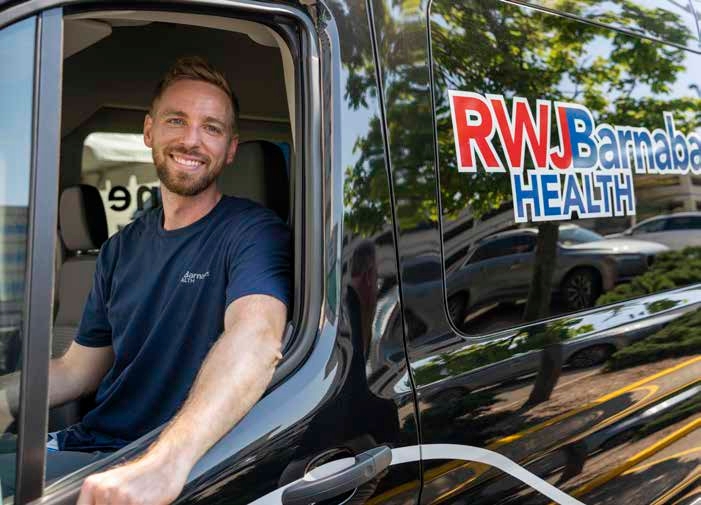
Supported by vital funding from the State of New Jersey under RWJBarnabas Health's "Our Healthy Communities" strategy, the groundbreaking street medicine initiative at TRMC brings essential care directly to people where they are. Led by Edward Egan, MD, an emergency medicine physician and medical director of the Street Medicine Program, a specialized clinical team travels in a medical van directly to shelters, encampments and community gathering spots to deliver lifesaving services.
Hospital-Grade Care
The care provided goes far beyond basic first aid. Dr. Egan’s team delivers hospital-grade urgent care, rapid testing, wound treatment and ongoing management for chronic conditions like diabetes, hypertension and asthma. The program also provides essential behavioral health services, including psychiatric assessments, mental health medication management and immediate medication-assisted treatment for addiction.
“Our goal is to meet people exactly where they are,” says Dr. Egan, who completed a Street Medicine Fellowship at the University of Pittsburgh Medical Center. “By bringing physical and behavioral healthcare directly to the streets, we remove barriers and build deep, lasting trust.”
The program offers early intervention, whole-person care and a compassionate alternative to the emergency room. “With regular outreach, we earn the trust of those we serve,” Dr. DiLiegro says. “We’re ensuring that vulnerable individuals in our community finally find a true medical home right where they need it most.”
Learn more about Our Healthy Communities initiatives at rwjbh.org/communityhealth.