INTERVIEW WITH
Eric Handler, DO
Chair, Emergency Medicine
Cooperman Barnabas Medical Center
When did you decide to be a physician?
I knew I wanted to be a physician from the age of 10, and during medical school narrowed it down to three areas: trauma surgery, anesthesia and emergency medicine.
What is the most rewarding part of your job?
When a patient asks, “Where’s your office?” because they’d like to make a follow-up appointment. Many people don’t realize that emergency medicine doctors don’t have an office—the emergency department is our office—so receiving that kind of appreciation from a patient is a great compliment. Emergency medicine is generally episodic, so you have a very short time to make a connection and gain a patient’s trust. Just making somebody feel better and having that rapport is wonderful.
When and how did you decide to become a pilot?
From a very young age, I built and flew remote-control airplanes. As I got older, I wanted to get my pilot’s license, but I had my residency, marriage and then kids. In my early 40s, I got my private pilot’s license, shortly followed by my instrument rating. A few years later, I got my commercial rating.
Do you have your own plane?
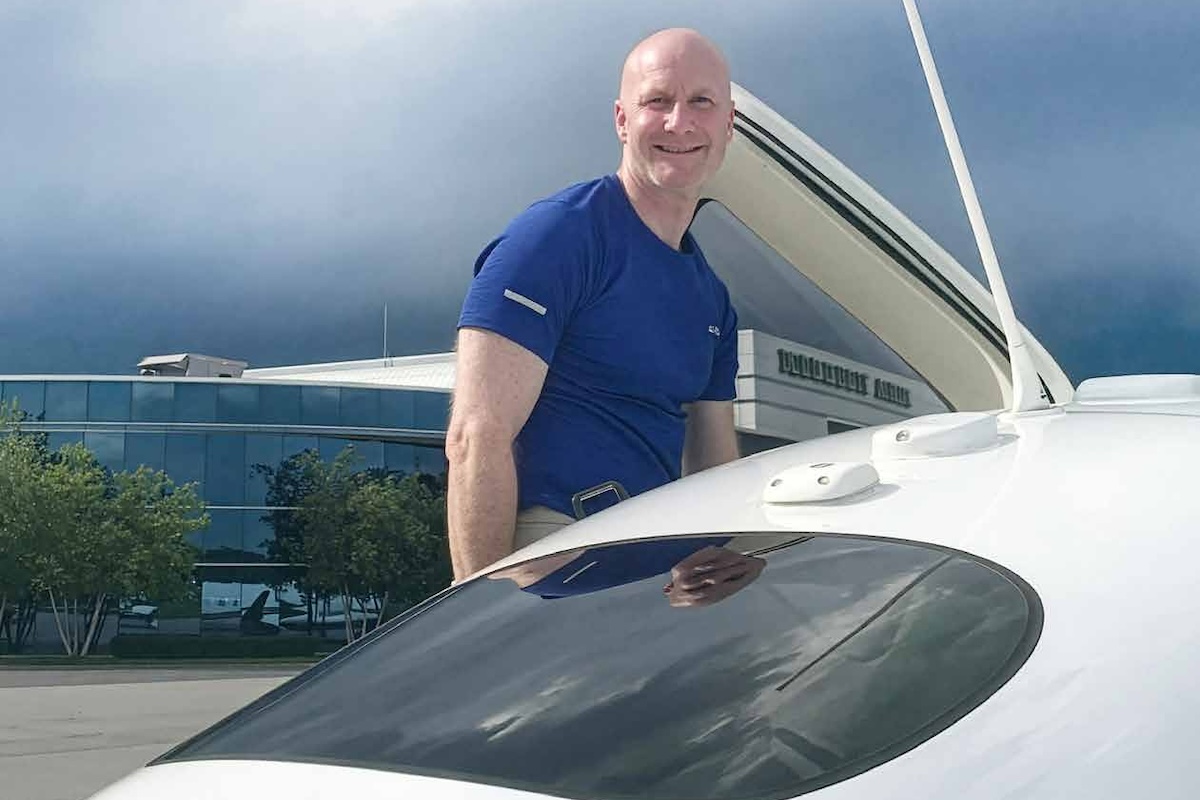
Yes, it’s a Cirrus SR22T, which is a single-engine plane. It’s technically a five-seater but can hold four adults.
What is the best thing about flying?
I really enjoy the mental challenge of it. There’s a lot of brain work—constant radio communications, making sure everything is operating as it should. It keeps me engaged, it’s fun and it offers a freedom that is not there in other modes of travel. It also saves time when traveling with my family and allows us to go places that would be inconvenient to drive to.
How and why did you begin volunteering as a pilot to help patients?
I’m very fortunate to have a plane and be able to fly. Doing some good with those opportunities is something that I’d always intended to do.
What organizations do you fly for?
I fly for three different volunteer organizations, all of which are under the auspices of the Air Care Alliance. The one that I started with and fly for the most is Angel Flight East. I also fly for Angel Flight NE, and Patient AirLift Services (PALS), which is out of Long Island.
In what circumstances might a patient need a flight?
We don’t fly critically ill patients, so it’s not “medical transport,” per se. We usually fly patients who need medical treatment but may have a significantly long drive to their treatment, which would make it difficult for them to keep those appointments, or patients who live in rural or remote areas and have limited access to specialized care.
Are there any patients who really stand out to you?
They’re all unique, and I’ve gotten to meet some very interesting people, but there are two who stand out. One was a 17-year-old from Pennsylvania with an osteosarcoma for which he had to travel multiple times to New York City for a specialized bone-sparing surgery. His mentality and positive spirit were amazing. The second is a woman with colon cancer who was so appreciative of Angel Flight East that she volunteered to start speaking for them, and now, even with her illness, she volunteers to do flight coordination for them.
Aside from flying, what activities do you enjoy?
Mountain biking and hanging out or traveling with my family.
What are your favorite movies?
“The Big Lebowski”; “The History of the World,” by Mel Brooks—or any Mel Brooks movie; and on the drama side, “The Shawshank Redemption.”
Do you watch the HBO Max series “The Pitt”?
I’ve watched both seasons. The first season was phenomenal. They nailed the medicine 90 to 95% of the time, and most of the cases were based on emergency medicine board questions. The second season had a different feel from the first, but I still found it enjoyable.